
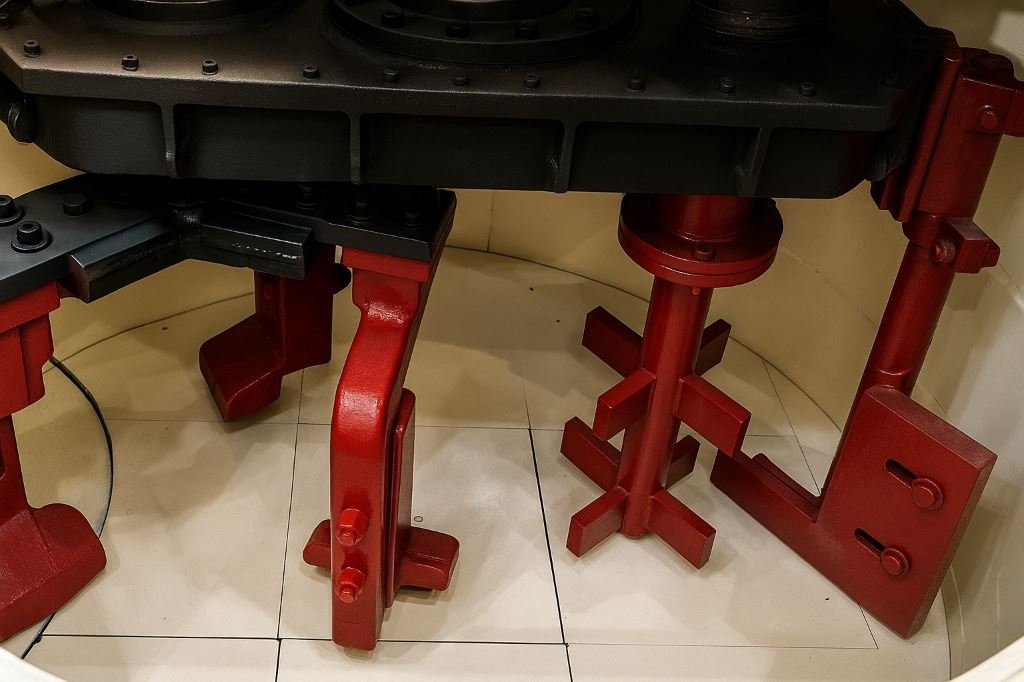
Planetary Mixer for Foundary Industry
Summary: This technical breakdown explores how adapting construction grade planetary mixing equipment solves complex sand preparation bottlenecks in metal casting plants. By utilizing dual axis kinematics, 550 HB Ni Hard metallurgy, and high torque gearboxes, foundries achieve superior green sand homogenization, dramatically reducing casting defects and increasing daily production yields.
The Engineering Challenge of Foundry Sand Preparation
Walk onto any active foundry floor in Kolhapur or Pune, and the first thing you notice is the relentless environment. Metal casting is an unforgiving process, and the foundation of a successful cast lies entirely in the molding sand. Green sand preparation is not merely about stirring dirt and water together. It is a highly exact chemical and mechanical process. You are taking raw silica sand and trying to coat every individual microscopic grain with an exact thickness of bentonite clay and carbonaceous additives.
If this mixture is too dry, the mold crumbles when molten metal hits it. If the mixture has wet spots or agglomerations, the trapped moisture turns to steam, creating blowholes and porosity in the final cast part. The mechanical force required to evenly distribute these binders through dense silica is massive. Standard pan mixers or older mulling wheels often fail to achieve true homogeneity because they leave dead zones in the mixing bowl. The material gets pushed to the outer walls or clumps in the center.
This is exactly where the adaptation of the concrete planetary mixer comes into play. Originally designed to blend highly viscous self compacting concrete, this specific machinery profile possesses the raw kinetic energy and structural durability required to process heavy foundry sand without breaking down. For the foundry industry in Maharashtra, upgrading to this specific equipment architecture is becoming a baseline requirement for surviving in the competitive automotive casting supply chain.
Advanced Kinematics and the Dual Axis Advantage
To understand why this machinery outperforms legacy equipment, we have to look directly at the kinematics of planetary motion. Traditional mixing relies on a simple rotating shaft. Planetary mechanics operate on a compound motion system.
Inside the static mixing pan, there is a central rotating turret. Attached to this turret are separate mixing stars. As the main turret revolves around the center of the pan, the individual mixing stars spin independently on their own vertical axes. Think of it like the earth revolving around the sun while also spinning on its own equator.
This counter current geometry means that the blades are actively crossing their own paths multiple times per second. There are zero dead zones. A standard mixer pushes the sand. A planetary mixer shears, folds, and compresses the sand. As the hardened scraping arms peel the thick bentonite and silica mixture away from the outer steel walls, they push the mass directly into the high velocity path of the spinning star blades.
The kinetic energy transfer here is intense. The blades do not just slice through the material. They are angled specifically to push and smear the clay against the sand grains. This aggressive kneading action activates the bentonite rapidly. Plant engineers report a total mixing time reduction of up to 15 percent per batch compared to conventional muller mixers. In a continuous foundry line running multiple shifts, shaving a minute off every batch cycle translates to massive increases in daily tonnage.
High Endurance Metallurgy for Extreme Abrasion
Foundry sand acts like liquid sandpaper. Silica, olivine, and chromite sands are highly abrasive materials that will consume mild steel components in a matter of weeks. When evaluating technical specifications for these mixers, the metallurgical composition of the internal wear parts is the most critical factor for preventing unexpected downtime.
Drawing from the heavy duty specifications of manufacturers like Balaji Construction Machines based in Satara, the internal wear components are engineered for maximum survivability. The mixing blades and the floor and wall liner plates are cast from premium Ni Hard iron.
Ni Hard is a specialized cast iron alloy specifically designed for abrasion resistance. These components carry a minimum hardness rating of 550 on the Brinell Hardness scale. Standard steel plates do not even come close to this level of rigidity. More importantly, the cast liner plates are manufactured to ensure uniform rigidity throughout their entire thickness.
When a standard plate wears down, the softer metal underneath gets exposed and fails rapidly. With premium Ni Hard castings, the abrasion rate remains perfectly constant from the first day of installation until the plate is finally worn thin. In construction applications, these plates can handle up to 5000 cubic meters of highly abrasive aggregate before needing replacement. For a metal casting plant, this means the maintenance crew spends less time inside the machine swapping out worn blades and more time keeping the automated molding lines fed with perfect sand.
The Transmission System and Torque Management
The heart of any industrial mixer is not the blades, it is the gearbox driving them. Mixing dense green sand generates massive torque spikes. When water first hits the dry clay and silica, the viscosity of the batch skyrockets instantly. The transmission system must push the spinning blades through this sudden resistance without shearing gear teeth or burning out the primary electric motor.
The technical standard for a truly reliable foundry mixer requires an in house designed planetary gearbox built with a strict Factor of Safety of 2.0. This engineering standard means the gearbox is physically capable of withstanding twice the absolute maximum calculated operational load before experiencing mechanical failure. Over engineering the transmission is the only way to guarantee longevity in a foundry environment.
Furthermore, thermal management within the transmission is critical. Continuous friction generates heat, which degrades lubricating oil and destroys bearings. These advanced gearboxes utilize a wide horizontal oil bath configuration. This design ensures that every gear, pinion, and bearing is continuously submerged and cooled by the lubricating fluid. The resulting thermal stability provides these heavy duty gearboxes with a minimum operational lifespan exceeding 10000 working hours. This provides plant managers with predictable maintenance schedules rather than catastrophic mid shift equipment failures.
Precision Blade Design and Material Flow
Looking closely at the mixing arms and blades reveals another layer of specialized engineering. The arms holding the mixing stars are constructed from heavy cast iron. They feature built in adjustment slots. As the Ni Hard blades eventually begin to wear down after thousands of batches, the maintenance technicians can simply loosen the bolts and lower the blades a few millimeters to maintain the optimal clearance gap with the floor plates.
The blades themselves have thickened outer edges to equalize the wear pattern. As the star rotates, the outer edge travels a greater distance and hits the sand at a higher velocity than the inner edge. By adding more mass to the high velocity strike zones, the engineers ensure the blade wears down evenly, maintaining its aerodynamic pushing profile for a much longer period.
This pushing angle is vital for foundry applications. If a blade merely slices through the sand, it separates the binder from the aggregate. The optimized angle of attack acts like a trowel, applying compressive force that smears the wet clay around the silica particles. This is how you achieve high green strength and high permeability in the final mold, ensuring that the casting will not suffer from sand inclusions or rough surface finishes.
Discharge Systems and Plant Floor Integration
Getting the sand perfectly mixed is only half the battle. Getting it out of the machine quickly without losing moisture is equally important. Planetary mixers utilize stationary outer pans, which allows for highly customized discharge solutions located on the bottom floor plate.
These units can support up to four separate swing out sector doors. This is a massive advantage for foundry layouts. A single mixer can drop sand directly onto different conveyor belts feeding multiple distinct molding lines.
These sector doors run inside heavy duty rubber seals, ensuring they are completely watertight. Green sand relies on very specific moisture percentages, often controlled down to a fraction of a percent. If a discharge door leaks water during the initial wet mixing phase, the entire batch chemistry is ruined. The doors are designed to be completely non jamming, powered by pneumatic or hydraulic cylinders depending on the specific automation setup of the plant. As the door swings open, the hardened scraping arms aggressively push the finished sand out of the machine, leaving the pan completely clean and ready for the next precise batch.
Operator Safety and Clean Working Environments
Foundry environments are actively trying to improve worker safety and air quality. Silica dust inhalation is a severe occupational hazard. Traditional open top mulling wheels release massive clouds of dangerous dust every time dry silica and powdered bentonite are loaded into the bowl.
The planetary mixing architecture solves this through complete enclosure. The mixing pan is sealed tight during operation. When connected to the factory dust extraction system, the interior of the mixer is kept under negative pressure. All airborne particulates are pulled directly into the filtration bags, keeping the ambient air on the factory floor clean and compliant with industrial safety regulations.
For routine cleaning and blade adjustment, the machine features a massive half opening safety cover. This gives technicians unhindered access to the internal mechanics. However, human error is always a risk on a busy factory floor. To prevent severe accidents, these covers are wired with heavy duty safety limit switches. If an operator unlatches the cover while the machinery is active, the switch immediately breaks the circuit to the main motor, stopping the heavy rotational mechanics dead in their tracks. A dustproof inspection grid allows operators to visually verify the sand consistency without ever bypassing the safety interlocks.
Automation and Batch Consistency
Modern metal casting is a game of extreme precision. You cannot rely on an operator manually opening a water valve and guessing when the sand looks right. Inconsistent sand leads directly to inconsistent castings, which leads to rejected shipments.
These planetary mixers are designed to integrate directly with Programmable Logic Controllers. Automated weigh hoppers drop the exact required mass of silica, bentonite, and coal dust into the mixer. The PLC then utilizes a timed liquid dosing system to inject the precise volume of water.
Because the mixing action is so consistent, the PLC can actually monitor the electrical current draw of the main motor to determine the exact plasticity of the sand. As the clay absorbs water and becomes sticky, the motor works harder and draws more amps. The computer reads this electrical spike and knows exactly when the binder is fully activated. It then automatically triggers the pneumatic discharge doors. This closed loop automated system removes all human guesswork from the sand preparation process, guaranteeing that batch number one and batch number one hundred have the exact same mechanical properties.
The Maharashtra Industrial Context
Why is this specific technology so critical for Maharashtra right now? The industrial corridors stretching from Mumbai to Pune, down to Satara and Kolhapur, represent one of the densest manufacturing zones in Asia. Foundries here are not just casting basic agricultural weights anymore. They are casting complex engine blocks, turbine housings, and high stress aerospace components.
These high end applications require flawless metallurgical integrity. You cannot cast a perfect engine block if your molding sand collapses during the pour. Foundries in Maharashtra are facing intense pressure from international buyers to reduce scrap rates and improve surface finishes. By integrating locally manufactured planetary mixers, like those built to rigorous global standards in Satara, these foundries eliminate their biggest process variable. They get access to machines with capacities ranging from 0.13 to 0.75 cubic meters per cycle, allowing them to scale the equipment exactly to their production line speed. Furthermore, relying on heavy machinery built within the state means spare parts like Ni Hard liners and replacement gearboxes are available immediately, preventing weeks of costly downtime waiting for imported components to clear customs.
The Financial Return on Investment
Upgrading a foundry sand plant requires capital, but the return on investment with planetary technology is aggressive. The first immediate saving is in binder consumption. Because the intense shearing action coats the sand grains so efficiently, many foundries find they can actually reduce the total amount of bentonite clay they purchase without losing any green strength in their molds. The second major financial impact is the reduction of scrap castings. If a facility can reduce their defect rate by just two percent through better sand homogeneity, the machinery pays for itself rapidly in saved metal, saved melting energy, and saved labor. Finally, the sheer durability of the 550 HB wear parts and the 2.0 safety factor gearbox means the maintenance budget drops significantly. The machine runs continuously, batch after batch, with minimal intervention. For a competitive foundry operating in India today, efficiency is not just about pouring metal faster, it is about controlling the raw variables perfectly. The planetary mixing system provides that exact level of uncompromising control.
Frequently Asked Questions (FAQ)
How does the planetary motion improve the actual strength of the sand mold?
The compound motion of rotating stars on a revolving turret forces the mixing blades to cross paths continuously. This aggressive shearing action physically presses and smears the wet bentonite clay perfectly around every individual grain of silica sand. This complete coating creates maximum bond strength and optimal permeability, preventing the mold from collapsing when heavy molten metal is poured into it.
Are the internal wear parts durable enough for constant silica exposure?
Yes, silica sand is highly abrasive, but the internal components are designed specifically for this challenge. The liner plates and the mixing blades are cast from premium Ni Hard iron. This alloy features a minimum Brinell hardness of 550. This exceptional rigidity ensures the plates wear down at a very slow and constant rate, easily handling thousands of hours of continuous industrial use before requiring maintenance.
Can this equipment handle different types of foundry sand formulas?
The machinery is highly versatile. While it is exceptional at preparing traditional green sand with clay binders, the intense mixing action is perfectly suited for preparing chemical resin bonded sands, specialized core sand mixtures, and even dense refractory cements used for relining foundry melting furnaces.
What happens if the equipment jams or overloads during a heavy batch?
These machines are engineered with massive torque tolerances. The primary transmission is a specialized gearbox built with a Factor of Safety of 2.0, meaning it can easily handle twice its rated operational load. If a batch is too dry and creates sudden extreme resistance, the heavy duty gearbox absorbs the shock without shearing gears. It also utilizes a horizontal oil bath to dissipate any heat generated during heavy continuous loads.
How does this mixer integrate with automated foundry lines?
The stationary design of the main pan allows for up to four separate watertight discharge doors on the bottom of the unit. These doors can be pneumatically or hydraulically controlled by a central PLC system. The computer can automatically weigh the dry ingredients, dose the exact amount of water, mix for a precisely programmed duration, and discharge the sand onto specific conveyor belts without any human intervention.