
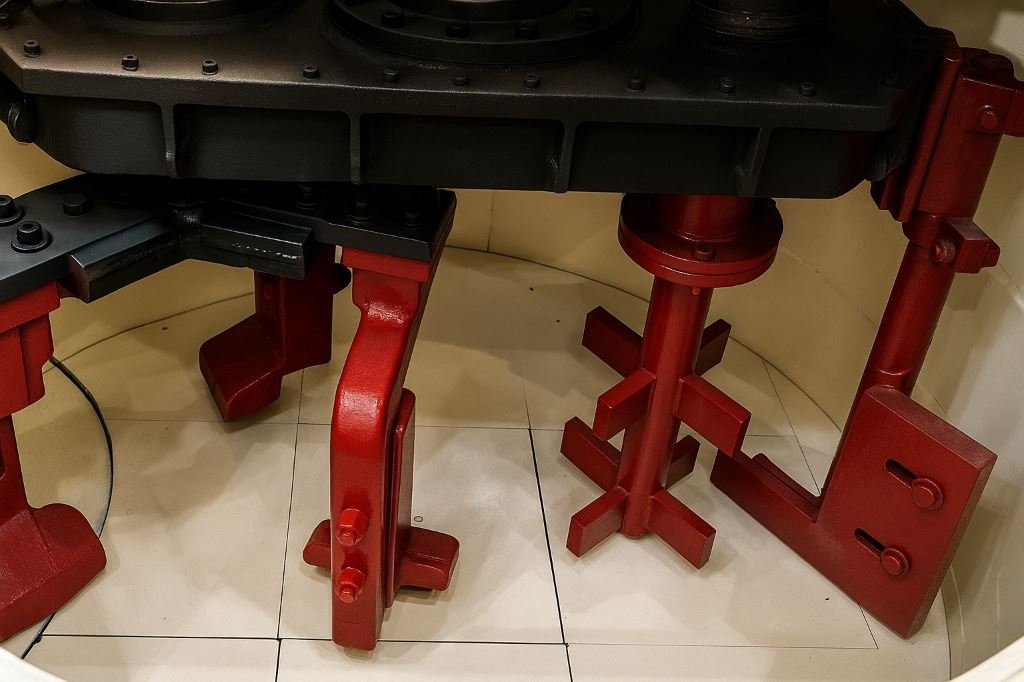
planetary mixer for chemical industry
Summary: The industrial landscape demands robust equipment capable of handling complex formulations. This detailed guide explores how heavy duty planetary mixers traditionally used for tough aggregates are revolutionizing the chemical and paint sectors. By leveraging advanced dual motion technology, extreme wear resistance, and high safety standards, these machines deliver unparalleled homogeneity. Manufacturers across industrial zones can achieve shorter batch times and superior product quality by adapting these powerful mixing systems for highly viscous liquids and abrasive chemical powders.
Introduction
Maharashtra stands as the industrial powerhouse of India. Regions like Mumbai, Pune, Thane, and Satara host countless manufacturing units that produce everything from heavy machinery to delicate pharmaceuticals. Among these thriving sectors, the chemical manufacturing and paint production industries hold a prominent place. These facilities process massive volumes of raw materials every single day, requiring machinery that promises reliability, massive torque, and exact precision. While the market offers a variety of standard blenders, a new trend is emerging among clever plant engineers. They are adopting equipment originally designed for the harshest environments imaginable. They are bringing the heavy duty concrete planetary mixer into the sophisticated realm of chemical and paint processing.
The crossover might seem surprising at first glance. How does a machine built to churn heavy gravel, coarse sand, and thick cement find a home in a facility making high grade wall coatings or complex industrial chemicals? The answer lies in the fundamental physics of mixing and the unparalleled engineering rigor applied to these heavy machinery components. Manufacturers have realized that the same planetary motion required to achieve perfect uniformity in ultra high performance concrete is exactly what is needed to break down pigment agglomerates in paint or to blend reactive dry chemical powders without leaving dead zones.
This comprehensive technical blog delves deeply into the mechanics, material science, and operational advantages of utilizing these powerhouse mixers in the chemical and manufacturing spaces. We will explore how specific technical features, inspired by standard models from manufacturers in Satara, translate into massive efficiency gains, lower maintenance costs, and superior product formulations.
The Fundamental Physics of Planetary Motion
To appreciate why these machines are transforming chemical processing, we must first understand the kinematics of planetary mixing. Traditional pan mixers rely on a simple rotating motion. Blades spin on a central axis, moving the material in a circular path. While this is sufficient for basic blending, it often leaves stagnant areas known as dead zones near the center or along the extreme outer walls of the mixing vessel. When dealing with specialized chemicals or highly pigmented paints, these dead zones result in inconsistent batches, rejected products, and severe financial losses.
Planetary motion solves this problem through a dual action mechanism. The mixing arms revolve around the central axis of the tank, but simultaneously, each individual star assembly rotates on its own independent axis. This counter rotating action forces the mixing blades to trace a complex, overlapping epicycloid path through the material. Every single millimeter of the mixing pan is swept multiple times during a single cycle.
In fluid dynamics and rheology, this dual motion generates immense shear forces across multiple vectors. When processing high viscosity fluids like paint bases or thick chemical slurries, this chaotic yet perfectly controlled movement prevents the material from simply flowing around the blades. Instead, the material is actively folded, compressed, and sheared. The result is a high intensity blending environment that forcefully breaks apart dry powder clumps and disperses liquid additives with microscopic precision. Engineering data confirms that this specific dual motion reduces overall mixing time by 10 to 15 percent compared to standard single axis machines, ensuring a perfectly homogeneous distribution of solvents, resins, and powders.
Engineering Highlights Adapted for Chemical Processing
When we examine the technical specifications of top tier machinery built in the Maharashtra industrial zones, the crossover potential becomes undeniably clear. The core components designed to withstand the brutal abrasion of crushed rock and silica sand provide a massive over engineering advantage when processing chemicals.
The Mixing Arms and Stars
The heart of the system features three cast iron arms per mixing star. These are not standard lightweight blades. They are paired with hardened steel scraping arms that constantly clean the walls and floor of the pan. In chemical manufacturing, residue buildup on the walls can cause cross contamination between batches. The hardened scrapers ensure that every gram of material is pushed back into the active mixing zone. Furthermore, the built in adjustment slots allow maintenance teams to easily tweak the blade positioning to compensate for any microscopic wear over time, ensuring the clearance between the blade and the pan floor remains absolutely perfect. The angle of attack on these blades is geometrically optimized to promote pushing rather than slicing. For paint manufacturing, this pushing action creates a massive pressure wave ahead of the blade, which is incredibly effective at wetting out dry pigment powders in the resin matrix.
Extreme Wear Resistance with High Grade Alloys
Chemical powders, ceramic raw mixes, and glass batches can be surprisingly abrasive. Ordinary stainless steel mixers often suffer from rapid surface degradation, which not only destroys the machine but also contaminates the chemical product with microscopic metal shavings. This is a fatal flaw in white paint production, where iron contamination ruins the color profile.
The planetary mixers sourced from standard industrial manufacturers solve this by utilizing premium liner plates and mixing blades cast from specialized alloys. These internal wear parts are cast from premium Ni Hard iron boasting a minimum hardness of 550 HB. Ni Hard is an alloy of iron, nickel, and chromium renowned for its extreme abrasion resistance. The uniform rigidity throughout all layers of the plate keeps the abrasion rate constant. With a proven lifespan of up to 5000 cubic meters when mixing harsh concrete aggregates, these liner plates will last practically forever when processing softer chemical powders or liquid paints. The outer edges of the mixing blades are significantly thickened to equalize wear over years of continuous three shift operation.
Transmission and Power Delivery
Chemical pastes and heavy paint bases present massive resistance to movement. The viscosity can spike dramatically during certain phases of the mixing cycle. To drive the mixing stars through these thick materials, the transmission must be flawless.
These machines feature an in house designed planetary gearbox built with a strict Factor of Safety of 2.0. This means the gearbox is physically capable of handling twice the maximum expected structural load before failing. It features a wide and cool running horizontal oil bath that ensures optimum gear lubrication at all times. This cooling capability is essential because chemical mixing often requires continuous operation for hours, which can generate significant heat in standard gearboxes. With a guaranteed minimum operational lifespan of 10000 hours, plant managers can eliminate the fear of mid batch transmission failures that could ruin expensive chemical formulations.
Sealing and Discharge Technology
One of the primary concerns when adapting a solid material mixer for liquids like paints or wet chemicals is leakage. The machinery addresses this brilliantly with a watertight discharge system. The bottom of the pan supports up to four swing out sector doors. These doors run inside heavy duty rubber seals that are completely watertight and non jamming.
Whether the factory chooses pneumatic, hydraulic, or manual door opening operations, the seals ensure zero leakage of expensive liquid chemical bases. Having multiple discharge doors also allows the factory to route the finished product into different packaging lines or holding tanks simultaneously, drastically speeding up the production workflow and minimizing plant downtime between batches.
Safety and Environmental Controls
Modern chemical and paint factories operate under strict environmental and worker safety regulations. Airborne chemical dust from mixing dry powders poses a massive health risk to operators and a highly explosive fire hazard.
These heavy duty mixers are equipped with a half opening safety cover. It is the widest opening cover available in its class, allowing for fast cleanup, washdowns, and inspection of wear parts between different colored paint batches. Most importantly, it is thoughtfully equipped with a dustproof inspection grid. This completely seals the mixing environment, preventing hazardous chemical dust from escaping into the factory atmosphere during the dry loading phase. Additionally, a built in safety switch automatically shuts off the massive main motor the split second the door opens, totally eliminating the risk of crushing injuries for the operators.
Revolutionizing the Paint Manufacturing Industry
The paint industry is a precise science of dispersion and homogenization. Paint is essentially a mixture of solid pigment particles suspended in a liquid binder and solvent matrix. The hardest part of making paint is preventing the microscopic pigment particles from clumping together.
When paint factories in regions like Pune and Thane utilize these planetary machines, the results are spectacular. The intense pushing and shearing forces generated by the dual motion blades physically tear apart pigment agglomerates. Because the blades sweep every inch of the massive vessel, the pigments are uniformly wetted by the liquid binders.
The batch capacities ranging from 0.13 cubic meters up to 0.75 cubic meters per cycle are perfect for medium to large scale paint production runs. Since the planetary motion reduces mixing times significantly, a paint plant can push out more batches per shift without expanding their physical footprint. Furthermore, the immense torque provided by the 2.0 Factor of Safety gearbox handles high solid formulations effortlessly. Manufacturers producing heavy industrial coatings, marine paints, or highly viscous epoxies find that the machinery never bogs down or stalls, even at the peak of the viscosity curve.
Transforming the General Chemical Industry
Beyond paints, the wider chemical industry heavily relies on precise blending. This includes the production of refractory materials, ceramic raw mixes, glass batch mixing, and various industrial chemical powders.
For dry powder chemical blending, homogeneity is the ultimate metric of success. If a factory is mixing a reactive chemical compound where a catalyst makes up less than one percent of the total volume, that catalyst must be dispersed absolutely perfectly. The overlapping epicycloid paths of the planetary mixing stars ensure that minor ingredients are scattered evenly throughout the entire bulk mass in a fraction of the time it would take a ribbon blender or a standard twin shaft machine.
For wet chemical applications, precision dosing is critical. Many manufacturers are integrating these mixers with programmable logic controllers and automated liquid dosing systems. Because the machine provides rapid homogenization, automated weight based recipe controls can pump exact amounts of liquid chemicals into the spinning vortex. The timed discharge systems then eliminate human error, ensuring every single batch meets rigorous quality assurance standards.
The robust construction using Ni Hard 550 HB materials proves invaluable for producing ceramics and glass. Glass batches contain high amounts of raw silica, which is notoriously abrasive and destroys lesser metals in weeks. By adapting the industry standard heavy components, chemical plants enjoy years of uninterrupted service, drastically lowering their overall maintenance budgets and capital expenditure over a ten year horizon.
The Strategic Advantage for Maharashtra Manufacturers
Maharashtra provides an incredible ecosystem for industrial companies. Having premium machinery manufacturers located right in the Satara industrial belt offers localized advantages for chemical plants across the state. Sourcing heavy machinery locally rather than importing it means that spare parts, such as replacement cast iron arms or new rubber seals for the watertight discharge doors, are just a short truck ride away.
Plant managers do not have to wait weeks for imported components to clear customs. They can maintain maximum operational uptime. Furthermore, the local engineers who build these machines can easily visit the chemical plants to customize the programmable logic controllers or adapt the pneumatic doors for specific factory layouts. This synergy between the heavy construction machinery sector and the chemical processing sector highlights the innovative engineering spirit thriving in the region.
Looking Towards the Future of Industrial Mixing
As chemical formulations become more complex and the demand for ultra high performance coatings increases, the machinery used to produce them must evolve. The brilliant adaptation of planetary mixing technology for fine chemicals proves that sometimes the best solutions come from cross industry innovation. By combining unstoppable torque, extreme wear resistance, and the perfect fluid dynamics of counter rotating planetary motion, these machines are setting a new standard for quality and efficiency.
Whether blending delicate dry chemical powders or churning out hundreds of liters of thick industrial paint, the planetary mixer has proven itself as an irreplaceable asset on the factory floor. The robust gearboxes, the impenetrable Ni Hard liners, and the completely watertight discharge systems collectively ensure that chemical manufacturers can push the boundaries of their production capabilities.
Conclusion
The integration of planetary mixers into the chemical and paint industries represents a massive leap forward in processing efficiency. Originally engineered for the toughest construction materials, these machines bring unparalleled durability, massive torque, and flawless mixing homogeneity to delicate chemical formulations. Factories across Maharashtra are discovering that the 550 HB hardness of Ni Hard wear plates, combined with 10000 hour gearboxes and perfectly sealed watertight doors, create the ultimate environment for both wet and dry processing. By reducing batch times and eliminating dead zones, these incredibly powerful machines not only improve the consistency of paints and chemicals but also drastically enhance overall factory profitability.
Frequently Asked Questions (FAQ)
What makes a planetary mixer better than a standard pan mixer for chemicals?
A standard pan mixer utilizes a single rotational axis, which often creates stagnant dead zones where material does not blend properly. A planetary mixer utilizes dual motion where the arms revolve around the tank and rotate on their own axes. This complex sweeping path eliminates all dead zones and reduces overall mixing time by up to 15 percent, guaranteeing total homogeneity for complex chemical formulations.
Can heavy duty construction mixers really handle liquid paints without leaking?
Yes, absolutely. High end models feature exceptionally designed watertight discharge doors. These swing out sector doors run tightly inside heavy duty rubber seals that prevent any liquid from escaping. They can be operated via pneumatic, hydraulic, or manual systems, ensuring zero leakage of expensive liquid paint bases and chemical solvents during the rigorous mixing cycles.
Why is the gearbox design so crucial for the paint industry?
Paint bases and heavy chemical slurries present extreme resistance and high viscosity. The mixers feature an in house designed gearbox built with a massive 2.0 Factor of Safety. This includes a wide, horizontal oil bath that keeps the gears cool under extreme loads. It carries a minimum operational lifespan of 10000 hours, ensuring the machine will not fail or stall when processing incredibly thick materials.
How do planetary mixers prevent contamination in white paint batches?
Standard stainless steel blenders can suffer from wear, shedding microscopic iron particles into the mixture, which severely discolors white paints and pure chemical powders. These advanced mixers use premium Ni Hard iron liner plates and blades boasting a minimum hardness of 550 HB. This extreme abrasion resistance ensures virtually zero surface degradation, protecting the purity and color integrity of the final product.
Are these machines safe for handling hazardous dry chemical powders?
Safety is a primary design feature. The mixing tanks are equipped with a large half opening safety cover that includes a highly effective dustproof inspection grid. This completely prevents hazardous chemical dust from escaping into the facility. Furthermore, a built in safety switch immediately shuts off the powerful main motor if the door is opened, protecting factory operators from accidental injuries.
Can these machines be automated for precise chemical recipes?
Yes. They integrate seamlessly with programmable logic controllers and automated dosing systems. Plant engineers can set up precision weight based recipe controls that automatically add the exact amounts of liquid and solid chemicals at the correct times. This level of automation totally eliminates human error in chemical dosing and ensures perfectly consistent batches every single time.
Why is sourcing this equipment from Maharashtra advantageous?
Maharashtra is a premier industrial hub with dedicated manufacturing zones like Satara. Sourcing locally allows chemical and paint factories to dramatically reduce shipping costs and delivery times. Most importantly, it ensures immediate availability of customized spare parts and rapid on site technical support from the engineers who actually built the machinery, guaranteeing maximum plant uptime.