
Concrete mixer PLC dosing systems
In modern industrial concrete manufacturing, consistency is the key differentiator between a highly profitable precast operation and one burdened by material waste and product rejections. Historically, concrete batching plants in India relied on manual estimation or basic volumetric timing to add water and chemical admixtures to their mixers. Unfortunately, manual liquid estimation introduces major human errors, resulting in unpredictable slump variations and structural inconsistencies.
With the rise of high-performance formulations like Self Compacting Concrete (SCC) and Ultra High Performance Concrete (UHPC), precision is no longer optional. A minor error in water or superplasticizer dosage can ruin a batch's flowability or decrease its cured compressive strength. This guide explores the engineering and benefits of Programmable Logic Controller (PLC) controlled chemical and water dosing attachments, showing how automated recipe systems elevate planetary mixer performance.
1. The Science of the Water Cement Ratio
In concrete physics, the water cement ratio (w/c) is the most critical factor governing the final strength, durability, and permeability of the cured concrete matrix. According to classic concrete design principles, there is an exact volume of water required to fully hydrate a given weight of cement. Any water added beyond this chemical hydration limit evaporates, leaving behind tiny capillary pores that weaken the concrete structure.
A mere 1% deviation from the designed water content can cause up to a 5% to 10% drop in compressive strength. Furthermore, wet aggregates (sand and gravel stored in open bins) carry varying levels of surface moisture depending on local weather conditions, making water control a dynamic challenge. Automated PLC dosing systems are engineered to integrate with moisture sensors, allowing the controller to dynamically calculate aggregate moisture and adjust the water discharge volume in real time, guaranteeing identical batch consistency.
2. The Dispersion Challenge: Chemical Admixtures
Modern concrete utilizes liquid chemical admixtures to achieve specific performance traits:
- Superplasticizers: Reduce water demand by up to 30% while maintaining high flowability.
- Accelerators: Speed up the initial setting time, allowing precast yards to demold products faster.
- Retarders: Delay hydration for long transit times in hot weather conditions.
Because these chemicals are added in very small volumes (often less than 1% of the cement weight), they must be distributed uniformly. If a superplasticizer is added in concentrated clumps, some zones of the mix will segregate and bleed, while other zones will remain dry and unworkable. PLC controlled dosing ensures that admixtures are diluted or injected in a controlled spray pattern, allowing the planetary mixer’s high shear blades to distribute the active molecules evenly throughout the paste.
3. Weight Based Dosing Systems: Recipe Driven Precision
For high precision precast plants, the weight based liquid dosing system is the industrial standard. This system operates as a closed loop weighing loop:
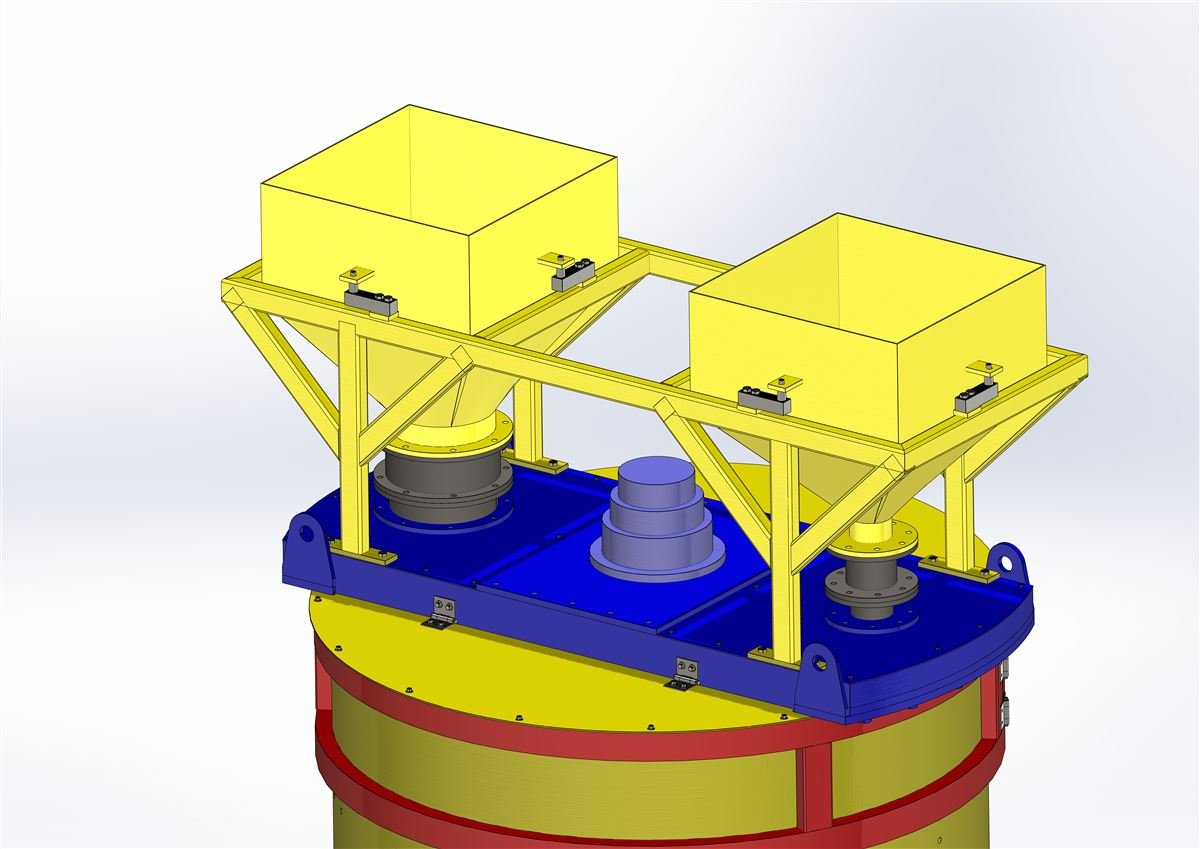
A dedicated liquid hopper is suspended above the planetary mixer on high precision load cells (typically S-type load cells). When the operator selects a recipe on the PLC human machine interface (HMI), the controller signals the inlet pump to fill the hopper. The load cells continuously measure the weight of the liquid, sending data back to the PLC. Once the target weight is reached, the inlet valve shuts. At the designated mixing stage, the PLC opens the discharge valve, spraying the liquid directly into the mixing pan. This weight based method is immune to changes in liquid temperature or viscosity, delivering an accuracy margin within 0.1%.
4. Time Based Dosing Systems: Interval Driven Efficiency
For standard concrete production where initial capital cost is a constraint, a time based dosing system offers a reliable and economical alternative. This method relies on flow calibration:
The system utilizes a stable centrifugal pump, a digital flow meter, and a fast acting solenoid valve. The PLC is programmed to open the valve and run the pump for a strictly timed interval. Because the pump operates at a constant pressure and the liquid viscosity remains relatively stable, the volume discharged is proportional to the run time. While slightly less precise than load cell weighing under extreme temperature changes, time based dosing is fast, highly reliable, and removes all manual guesswork from the mixing cycle.
5. Mechanical Integration with Balaji Mixers
At Balaji Construction Machines & Spares, we custom build our dosing attachments to integrate seamlessly with our planetary concrete mixers. The mixer covers are designed with dedicated watertight ports and distribution spray bars that disperse the liquid evenly across the active mixing stars, rather than dumping it in a single pile. Our sector discharge doors are equipped with watertight rubber seals, preventing any fine slurry or water from escaping the pan during high volume liquid blending.
6. Return on Investment (ROI) and Material Savings
Integrating an automated dosing system delivers immediate financial returns:
By eliminating the risk of ruined "wet" or "dry" batches, plants significantly reduce scrap material wastage. Furthermore, precise superplasticizer dosing prevents over usage of expensive chemical additives. Over a typical year of operation, a precast manufacturer can save up to 3% to 5% in raw material costs, allowing the dosing attachment to pay for itself within a few months of continuous operation.
Conclusion
Transitioning from manual or timing based liquid addition to PLC automated dosing is a vital upgrade for any quality conscious concrete producer. By stabilizing the water cement ratio and ensuring uniform chemical dispersion, automation helps you deliver premium concrete block and precast products with consistent durability.
Balaji Construction Machines & Spares manufactures fully automated planetary mixers and custom dosing attachments at our state of the art MIDC Satara facility in Maharashtra. Contact our engineering team today to customize your mixer controls.
Frequently Asked Questions (FAQ)
What is a PLC controlled dosing system in a planetary mixer?
A PLC controlled dosing system is an automated attachment that measures and adds liquids, such as water and chemical admixtures, into the concrete mixer using pre programmed recipes, ensuring consistent concrete workability and strength.
How does weight based dosing compare to time based dosing?
Weight based dosing uses load cells to weigh the liquid before discharge, offering maximum accuracy (+/- 0.1%) regardless of liquid temperature or flow changes. Time based dosing uses timed solenoid valves, which is a simpler and more economical solution for repeating, standard batches.
Can chemical admixtures be dosed using the same system as water?
No. Because chemical admixtures are highly concentrated and used in small volumes, they require separate, smaller dosing lines and flow meters to prevent chemical cross contamination and ensure measurement accuracy.
How does automated dosing prevent segregation and cement clustering?
The PLC system sprays the liquid through a distribution manifold directly onto the high shear mixing stars. This gradual, uniform spray dispersion allows the mixing paddles to coat all particles immediately, preventing wet aggregate segregation and dry cement clustering.
Can older mixers be retrofitted with Balaji's PLC dosing systems?
Yes. Balaji's automation team can retrofit existing planetary or pan mixers with custom dosing assemblies, including load cells, solenoids, spray bars, and a standalone PLC control panel, bringing modern automation to legacy concrete plants.